


Ring Blower Applications in Electroplating Plants
🔧 Introduction
Electroplating plants rely heavily on controlled air supply for agitation, oxidation, and maintaining uniform plating quality. Among the most efficient solutions, ring blowers (also known as regenerative blowers) stand out for their oil-free operation, reliability, and ability to deliver continuous airflow at low pressure.
⚙️ Operation of Ring Blowers in Electroplating
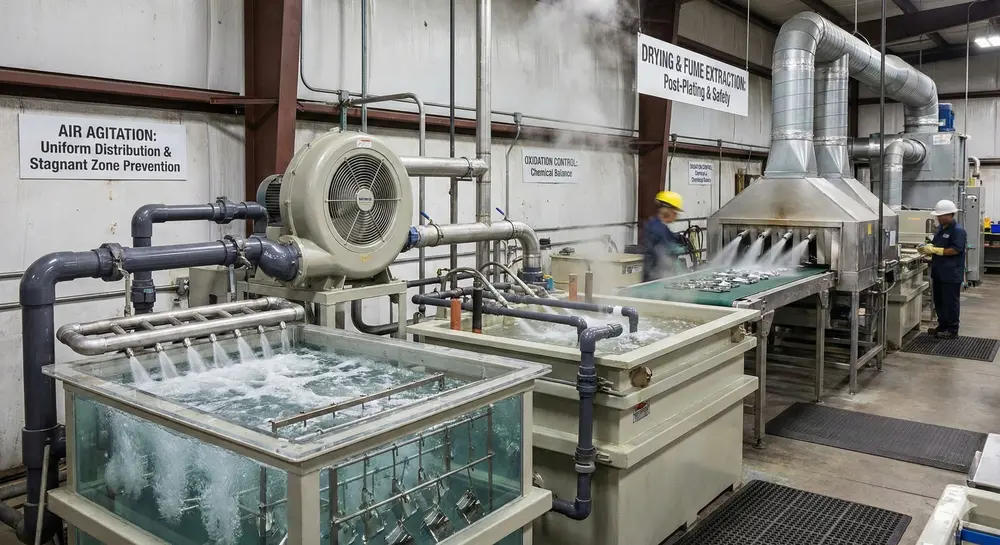
- Air Agitation: Ring blowers supply air to plating tanks, ensuring uniform ion distribution and preventing stagnant zones.
- Oxidation Control: Continuous airflow helps maintain chemical balance and prevents unwanted deposits.
- Drying & Fume Extraction: Used in post-plating drying stations and for removing harmful fumes.
📐 Technical Details
- Working Principle: Regenerative impellers recirculate air multiple times within the housing, creating steady pressure.
- Pressure Range: Typically 100–300 mbar, suitable for plating tanks.
- Flow Rate: 50–2000 m³/hr, depending on tank size and agitation needs.
- Design Features:
- Oil-free, ensuring contamination-free plating.
- Compact design with low noise levels.
- CE/ISO-certified models for industrial compliance.
🛠 Usage & Improvement Analysis
- Usage:
- Electroplating tanks (nickel, chrome, zinc).
- Degreasing and pickling baths.
- Exhaust systems for chemical fumes.
- Improvement Analysis:
- Replacing compressed air systems with ring blowers reduces energy consumption by up to 30%.
- Enhanced plating uniformity due to consistent airflow.
- Lower maintenance compared to centrifugal blowers.
✅ Merits
- Oil-free, contamination-free operation.
- Energy-efficient compared to compressors.
- Compact and easy to install.
- Long service life with minimal maintenance.
❌ Demerits
- Limited to low-pressure applications.
- Not suitable for very high-volume air demands.
- Sensitive to dust and moisture ingress.
📊 How to Use Ring Blowers in Electroplating
- Connect the blower outlet to the air distribution manifold.
- Use diffusers or spargers inside tanks for uniform agitation.
- Ensure proper filtration to avoid chemical vapors entering the blower.
- Operate within the recommended duty cycle for longevity.
🎯 Selector Guide for Ring Blowers
- Tank Size: Larger tanks require higher flow capacity.
- Chemical Type: Aggressive chemicals may need corrosion-resistant materials.
- Noise Level: Choose models with acoustic enclosures for indoor plants.
- Certification: CE/ISO-certified blowers for compliance.
📈 Optimisation Tips
- Install variable frequency drives (VFDs) for airflow control.
- Use multiple small blowers instead of one large unit for redundancy.
- Regularly clean diffusers to maintain efficiency.
- Monitor airflow with gauges to prevent overloading.
🩺 Troubleshooting
- Low Airflow: Check for clogged diffusers or leaks.
- Overheating: Ensure proper ventilation and avoid overloading.
- Noise Increase: Inspect bearings and impeller alignment.
- Chemical Ingress: Install non-return valves and filters.
🛠 Installation Guidelines
- Place the blower on a vibration-free foundation.
- Ensure adequate ventilation around the unit.
- Use flexible hoses to reduce vibration transmission.
- Install safety relief valves to prevent overpressure.
- Electrical connections must comply with industrial standards.
📌 Conclusion
Ring blowers are a cost-effective, reliable, and clean solution for electroplating plants. By ensuring proper selection, installation, and optimisation, industries can achieve better plating quality, reduced energy costs, and longer equipment life.