


Complete Technical Guide to Ring Blower Manufacturing, Assembly, and Installation
Introduction
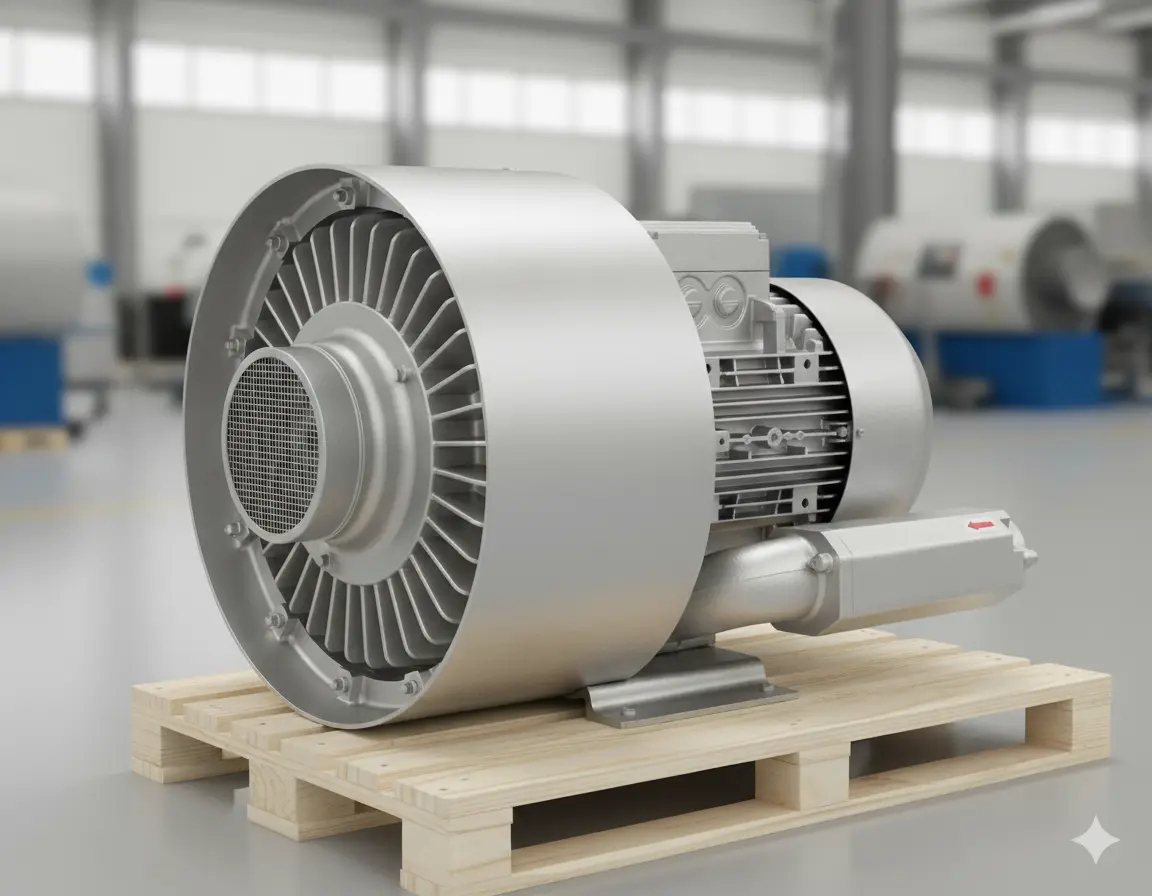
As a leading ring blower specialist and manufacturer in India, we design and supply side channel (regenerative) blowers for a wide range of industrial and environmental applications.
Our ring blowers are known for oil-free air delivery, high efficiency, and low maintenance, making them ideal for Biofloc aquaculture, STP (Sewage Treatment Plants), and ETP (Effluent Treatment Plants) — as well as for pneumatic conveying, vacuum lifting, and cooling systems.
In this blog, we’ll discuss the manufacturing process, assembly, installation procedure, and safe running practices of ring blowers, with insights into their specific applications in Biofloc, STP, and ETP systems.
1. Manufacturing Process of Ring Blowers
The performance and reliability of a ring blower depend on precision engineering and quality materials used during manufacturing.
Material Selection
- Housing and Impeller: Made from high-grade aluminum alloy or cast iron, ensuring durability, strength, and excellent heat dissipation.
- Bearings: Fitted with sealed ball bearings for smooth, maintenance-free operation.
- Shaft and Motor: Designed for continuous-duty (S1) operation, suitable for industrial environments.
Precision Engineering
The impeller is CNC-machined and dynamically balanced to achieve near-zero vibration and stable air delivery.
Tight tolerances between the impeller and casing create the regenerative airflow — ensuring steady pressure output and quiet operation.
Testing and Quality Control
Each blower undergoes rigorous performance testing:
- Airflow (m³/hr) and pressure verification
- Vibration and noise level check
- Thermal stability and overload performance
- Leak-proof testing for housing integrity
All blowers are ISO 9001 compliant and factory-tested before dispatch.
2. Assembly Process
Assembly plays a key role in ensuring consistent performance and longevity.
Assembly Steps
- Base Mounting: The stator and motor frame are mounted on a precision-aligned base.
- Impeller Installation: The impeller is installed on the motor shaft using a calibrated torque fitting.
- Housing Alignment: The upper and lower housing sections are assembled with uniform clearance.
- Sealing and Bolting: High-temperature gaskets are used for leak-free sealing, and all bolts are torque-calibrated.
- Performance Testing: The complete unit is tested for pressure, flow rate, and mechanical balance.
This ensures smooth and vibration-free performance for industrial applications.
3. Installation Guidelines for Ring Blowers
Correct installation of ring blowers is essential for safe operation and long service life — whether used in Biofloc, STP, or ETP systems.
Site Preparation
- Install in a cool, dry, and well-ventilated area.
- Maintain at least 300 mm clearance around the blower.
- Ensure a level foundation to minimize vibration.
Mounting
- Use anti-vibration pads or isolators to reduce mechanical stress.
- Keep air intake and outlet lines aligned to prevent bearing load imbalance.
- Use flexible hoses between blower and pipe lines to absorb vibration.
Electrical and Air Connection
- Verify motor voltage, phase, and rotation direction before connection.
- Install overload relays or MPCBs for motor protection.
- Proper earthing (grounding) is mandatory.
- Fit inlet filters and outlet silencers to reduce dust and noise.
4. Application Areas of Ring Blowers
Ring blowers are widely used across industrial, environmental, and aquaculture sectors. Here’s how they serve in Biofloc, STP, and ETP systems:
A. Biofloc Aquaculture Systems
In Biofloc fish farming, maintaining dissolved oxygen (DO) levels and proper water circulation is critical for microbial growth and fish health.
Why Ring Blowers are Ideal for Biofloc Systems:
- Continuous, oil-free aeration and oxygen supply.
- Capable of running 24/7 with low maintenance.
- Resistant to moisture and corrosion.
- High pressure ensures air reaches multiple tanks through long pipelines.
Installation Tip:
Install the blower close to the tanks, with an air manifold and diffusers submerged in water. Always fit a non-return valve to prevent water backflow into the blower.
B. STP (Sewage Treatment Plants)
In Sewage Treatment Plants, blowers are used for aeration in biological treatment tanks to promote bacterial growth and organic waste breakdown.
Benefits of Using Ring Blowers in STP Systems:
- Delivers steady airflow for diffused aeration.
- Compact, silent, and energy-efficient.
- Low vibration, allowing indoor installation.
- Minimal maintenance and long operational life.
Installation Tip:
Mount the blower near the aeration tank, with air distribution pipelines properly supported. Use intake filters and check valves for safety.
C. ETP (Effluent Treatment Plants)
In Effluent Treatment Plants, blowers provide oxygen to break down industrial pollutants in wastewater.
Key Features:
- Oil-free compressed air prevents chemical contamination.
- Capable of handling continuous-duty operation in harsh environments.
- High efficiency for aeration tanks and equalization basins.
Installation Tip:
Install in a ventilated area away from corrosive fumes. Clean air filters regularly to maintain efficiency.
D. Other Industrial Applications
- Pneumatic conveying systems
- Vacuum packaging and air knives
- Cooling, drying, and material handling
- Medical and printing machinery
5. Safe Operation and Maintenance
Before Start-Up
- Ensure air filters, silencers, and all pipe joints are securely fastened.
- Check rotation direction (arrow marked on blower housing).
- Ensure there are no obstructions at inlet or outlet.
During Operation
- Monitor pressure, current, and temperature.
- Avoid exceeding rated load or temperature limits.
- Keep ventilation clear around the motor.
After Operation
- Regularly clean the inlet filter and inspect bearings.
- Log operating conditions periodically for preventive maintenance.
6. Safety Guidelines
· Never block inlet or outlet openings during operation.
· Always disconnect power before maintenance.
· Use protective gloves and ear protection during operation.
· Avoid operating the blower in explosive or highly corrosive environments.
Conclusion
A properly manufactured, assembled, and installed ring blower ensures years of reliable, maintenance-free performance.
Whether it’s maintaining Biofloc aeration systems, powering STP/ETP treatment plants, or supporting industrial air processes, these blowers deliver consistent efficiency, durability, and safety.
Our team specializes in designing, installing, and servicing ring blowers for all industrial applications across South India.
For expert assistance on ring blower sizing, installation design, or application-specific support, contact M/s GLOBALACCESS ENGINEERING & TECHNOLOGY PVT LTD— we specialize in providing complete air blower solutions for South Indian industries and beyond.