


Precision Measurement: Thickness Gauge Digimatic – Operation, Usage & Optimization
🔧 INTRODUCTION
In industries where dimensional accuracy defines quality — from sheet metal fabrication to plastics, glass, and coatings — the Thickness Gauge Digimatic has become indispensable. Combining digital precision with ease of use, it ensures reliable measurement of thin materials, coatings, and films. This blog explores its operation, technical details, usage, merits, demerits, selection criteria, optimization, troubleshooting, and installation guidelines.
⚙️ OPERATION OF THICKNESS GAUGE DIGIMATIC
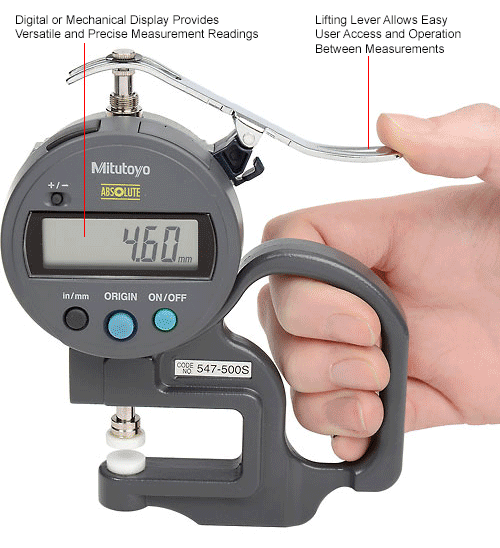
- Principle: Measures thickness by placing the material between a flat anvil and a spindle connected to a digital sensor.
- Digital Readout: Provides instant, high-resolution measurements in microns or millimeters.
- Zero Setting: Allows calibration before measurement for accuracy.
- Data Output: Many models include Digimatic ports for data transfer to SPC systems.
📐 TECHNICAL DETAILS
- Resolution: Typically 0.001 mm (1 micron).
- Range: 0–10 mm, 0–25 mm, or higher depending on model.
- Accuracy: ±0.002 mm.
- Display: LCD digital readout with metric/inch conversion.
- Features:
- Auto power-off for battery saving.
- Data hold and preset functions.
- Hardened stainless-steel anvils for durability.
🛠 USAGE & IMPROVEMENT ANALYSIS
- Applications:
- Sheet metal thickness in automotive and aerospace.
- Plastic films, paper, and textiles.
- Coating thickness in paints and plating.
- Improvement Analysis:
- Faster than mechanical micrometers.
- Reduces human error with digital readout.
- Enables integration with quality control software.
✅ MERITS
- High precision and repeatability.
- Easy to operate with minimal training.
- Digital output for SPC/QA systems.
- Portable and lightweight.
❌ DEMERITS
- Battery dependency.
- Sensitive to dust and moisture.
- Limited to small thickness ranges compared to ultrasonic gauges.
📊 HOW TO USE THICKNESS GAUGE DIGIMATIC
- Calibrate using a standard block.
- Place material between the anvil and the spindle.
- Press lightly to avoid deformation.
- Read the measurement on the digital display.
- Record or transfer data via the Digimatic port.
🎯 SELECTOR GUIDE
- Material Type: Metals, plastics, paper, or coatings.
- Range Required: Choose based on expected thickness.
- Environment: Dust-proof or waterproof models for harsh conditions.
- Data Needs: Models with SPC output for automated QA.
📈 OPTIMIZATION TIPS
- Use constant-force anvils to avoid operator error.
- Regularly calibrate with certified standards.
- Integrate with SPC software for real-time monitoring.
- Train operators on proper handling to avoid deformation.
🩺 TROUBLESHOOTING
- Erratic Readings: Check battery and recalibrate.
- No Display: Replace battery or check connections.
- Inconsistent Results: Clean anvils and ensure proper contact.
- Data Transfer Issues: Verify Digimatic cable and software compatibility.
🛠 INSTALLATION GUIDELINES
- Store in a clean, dry environment.
- Mount on stable stands for repetitive measurements.
- Ensure proper grounding when connecting to SPC systems.
- Keep calibration blocks nearby for quick verification.
📌 CONCLUSION
The Thickness Gauge Digimatic is a powerful tool for industries demanding precision. By ensuring proper selection, installation, and optimization, companies can achieve better quality control, reduced rework, and improved efficiency.
📞Contact – Globalaccess Engineering
Globalaccess Engineering supplies: 🌐 www.globalaccesset.com
- Bore Gauges
- Granite Surface Plates
- Ring Blowers
- Industrial Measuring Instruments
- Calibration Accessories
- Custom Solutions for Manufacturing Units
We offer the best pricing, fast delivery, and excellent pre- & post-sales support.
📞 Contact us today for quotations and technical guidance.
Email: support@globalaccesset.com
Website: https://globalaccesset.com
Facebook link: https://www.facebook.com/globalaccesset
YouTube link: https://www.youtube.com/@Globalaccess-ox5jn
LinkedIn link: https://www.linkedin.com/in/globalaccess-engineering-technology-private-ltd-0a5a0a27a/