


THE COMPLETE TECHNICAL THESIS ON GRANITE SURFACE PLATES
Structure, Flatness, Unflatness, Wear, Calibration & Re‑Lapping — Explained Like a Story
1. The Silent Hero of Precision Engineering
Every precision measurement in manufacturing—whether in aerospace, automotive, defense, medical, or toolmaking—begins with one unsung hero: the surface plate.
It sits quietly in inspection rooms, laboratories, and workshops. It doesn’t move, doesn’t make noise, and doesn’t look impressive. Yet every micrometer, every gauge block, every height gauge, every CMM setup… all depend on the accuracy of this one flat reference plane.
Among all materials used for surface plates—cast iron, glass, and granite—one material stands above the rest:
Granite.
But why granite? Why not steel? Why not ceramic? Why not composite?
To understand this, we must begin with the story of granite itself.
2. Granite: A Material Born for Precision
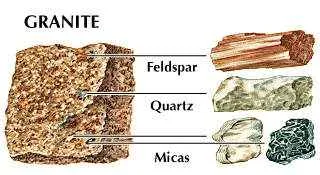
Granite is not just a rock. It is a naturally engineered composite, formed over millions of years, composed of:
- Quartz — extremely hard, provides wear resistance
- Feldspar — gives structural stability
- Mica — adds lubricity and reduces friction
- Other minerals — depending on quarry and region
This interlocking crystalline structure gives granite unique engineering advantages:
- High compressive strength — resists deformation under load
- Low thermal expansion — temperature changes affect it less
- Non‑magnetic — safe for magnetic tools and instruments
- Corrosion‑proof — unaffected by oils, coolants, alkalis, and mild acids
- Natural vibration damping — improves repeatability
- Uniform grain distribution — ensures even wear
Unlike cast iron, granite does not burr. If damaged, it chips, preventing raised spots that cause false readings.
This is why granite replaced cast iron in most modern metrology labs.
3. What Exactly Is a Surface Plate?
A surface plate is a precision‑lapped, extremely flat reference surface used for:
- Dimensional inspection
- Geometric tolerance verification
- Calibration of instruments
- Layout and assembly
- Tooling setup
- Parallelism and perpendicularity checks
Surface plates come in three materials:
- Cast Iron — rigid, good damping, but prone to rust and burrs
- Granite — stable, corrosion‑free, highly accurate
- Glass — used rarely for light‑duty applications
Benefits of Granite Surface Plates
Among all these three variations, granite surface plates are the most beneficial. But why? Read the below points to know the real reasons.
Stability
One of the key boons of using granite surface plates is their extraordinary stability. Granite is a dense, hard material that doesn’t deform, bend, or warp easily, even under heavy weights. This feature makes these plates effective for precision-related uses. By the way, any precision-related work requires a flat surface for accurate readings.
Flatness
The next significant benefit of using granite surface plates is their flatness. Granite is an rigid component with a uniform grain structure. It makes granite plates extremely flat. Hence, when a person positions precision parts on these tables, they get a flat and stable surface to rest. It is important to mention that a flat and rigid surface is necessary for precision assembly.
Corrosion-resistant
Do you know that granite has a great resistance against all sorts of chemicals? Yes, granite as a material is resistant to certain chemicals, alkalis and acids. This feature ensures the surface remains intact even after exposure to corrosive substances and harsh environments. Are you in search of authentic spare parts? Contact a renowned Mitutoyo original spare parts supplier in Dubai, UAE.
Durability
Durability is one of the most notable features of granite surface plates. Granite surface plates are durable and can resist heavy usage without deterioration. Unlike polypropylene of wooden surface plates, granite plates can resist scratches, chips, and dents. For this reason, they are ideal for high-traffic areas.
Aesthetics
Are you looking forward to offering your work area an attractive yet professional appearance? If yes, then granite surface plates are ideal for your needs. These plates can blend with the other equipment in your work area in a seamless manner.
Keeping a granite surface plate in your work area means enhanced workspace aesthetics. No matter what type of surface plates you want, contact any reputable cast iron surface plate supplier in Dubai, UAE.
Drawbacks of Granite Surface Plates
Though efficient and beneficial for different uses, granite surface plates have some drawbacks, too. What are they? Let’s have a quick look.
- Granite surface plates are too heavy, which sometimes makes them difficult to move.
- In comparison to other surface plates, granite plates are more expensive.
- Granite surface plates require regular maintenance and cleaning to retain their luster and looks.
- Though granite is a tough and rigid component, granite surface plates can easily get scratches, chips, and cracks.
Granite surface plates are available in Grade 0, Grade 1, Grade 2, and Grade 3, depending on flatness tolerance.
4. The Science of Flatness: What “Flat” Really Means
A granite surface plate is never perfectly flat. Instead, it is manufactured so that the entire surface lies within two imaginary parallel planes separated by a tiny tolerance.
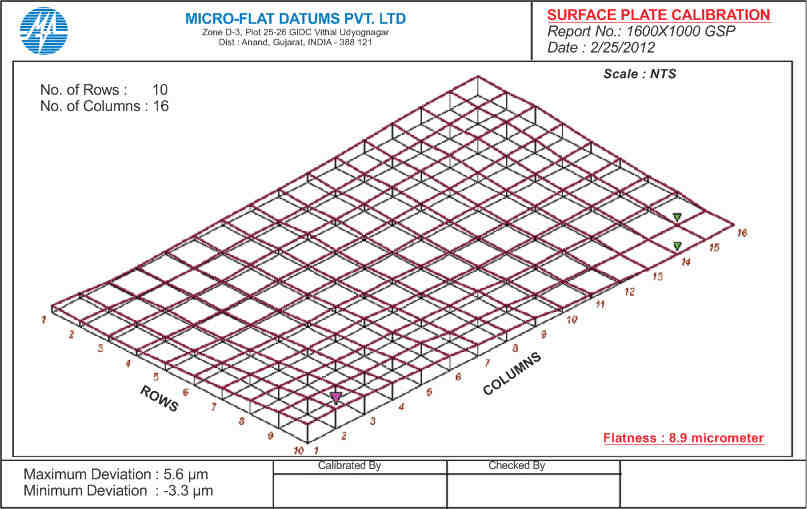
Flatness Error = Highest Peak – Lowest Valley (in microns)
Example: If the highest point is +6 µm and the lowest is –4 µm, Total unflatness = 10 µm.
Flatness vs Straightness vs Level
- Flatness — accuracy of the entire surface
- Straightness — accuracy along a line
- Level — orientation relative to gravity
A plate can be flat but not level, or level but not flat. Flatness is the critical parameter for measurement accuracy.
5. How Granite Plates Lose Flatness Over Time
Even the best granite plate wears. Unflatness develops slowly and silently.
Common causes of unflatness
- Localized wear — center area wears faster due to repeated use
- Abrasive dust — acts like sandpaper
- Thermal gradients — hot parts cause temporary bulging
- Improper support — incorrect stand points cause sagging or twisting
- Overloading — heavy parts on small contact areas cause deflection
- Impact damage — dropped tools create micro‑fractures
Typical unflatness patterns
- Convex — center high
- Concave — center low
- Twist/Saddle — opposite corners high
- Localized wear spots — shiny patches
Even a 5–10 micron dip can cause major measurement errors.
6. How Unflatness Affects Measurement Accuracy
Unflatness leads to:
- Incorrect height gauge readings
- Parallelism and perpendicularity errors
- False flatness verification
- Wrong gauge block stacking
- Misalignment during assembly
A surface plate is the foundation of measurement. If the foundation is wrong, everything built on it is wrong.
7. How Flatness Is Measured (Professional Calibration)
Calibration labs use:
- Autocollimator
- Electronic level
- Repeat‑o‑meter
- Master straightedge
The plate is divided into a grid, and measurements are taken along:
- Longitudinal lines
- Transverse lines
A flatness contour map is generated and compared with standards:
- DIN 876
- IS 2285
- ASME B89.3.7
A calibration certificate includes:
- Flatness deviation
- Measurement grid
- Environmental conditions
- Conformance statement
8. Re‑Lapping: How Flatness Is Restored
Re‑lapping is a controlled abrasive process that removes high spots and restores flatness.
Step‑by‑step re‑lapping process
- Surface evaluation — full flatness mapping
- Marking high spots — using marking compounds
- Lapping operation — cast iron or diamond‑charged lapping plate
- Systematic motion — figure‑eight and geometric patterns
- Progressive grit reduction — coarse → medium → fine
- Re‑measurement — after each cycle
- Final finishing — achieving required micro‑texture
- Certification — new calibration report issued
When re‑lapping is NOT possible
- Deep cracks
- Severe corner breakage
- Excessive previous re‑laps
- Internal fractures
In such cases, replacement is more economical.
9. How to Detect Unflatness Early
Early warning signs
- Height gauge readings vary by location
- Parts rock when placed on the plate
- Shiny worn patches appear
- Calibration reports show increasing deviation
Quick in‑house checks
- Straightedge + feeler gauge
- Dial indicator sweep
- Visual inspection
(Not a substitute for professional calibration.)
10. Best Practices to Extend Plate Life
- Clean before and after use
- Use lint‑free cloths
- Avoid dragging parts
- Keep covered when not in use
- Avoid placing hot parts
- Use support blocks for heavy components
- Maintain stable temperature (20°C recommended)
- Ensure proper 3‑point support
- Rotate working zones periodically
- Schedule annual calibration
A well‑maintained granite plate can last 20–30 years.
11. Advantages of Granite Surface Plates
- Exceptional stability
- High flatness
- Corrosion resistance
- Durability
- Aesthetic appearance
- Non‑magnetic
- Vibration damping
12. Drawbacks of Granite Surface Plates
- Heavy and difficult to move
- More expensive than cast iron
- Requires regular cleaning
- Can chip if mishandled
13. Applications Across Industries
Granite surface plates are essential in:
- Aerospace
- Automotive
- Defense
- Manufacturing
- Tool rooms
- Calibration labs
- R&D centers
- Medical device manufacturing
They are used for:
- Inspection
- Marking
- Tooling setup
- Dimensional measurement
- Geometric tolerance verification
- Assembly alignment
14. Frequently Asked Questions (FAQ)
Q1. What are the types of surface plates?
Cast iron, granite, and glass.
Q2. Why is granite preferred?
Because of its stability, flatness, corrosion resistance, and durability.
Q3. How often should granite plates be calibrated?
Every 12–24 months, or 6–12 months for high‑precision use.
Q4. Can granite plates be re‑lapped?
Yes—unless they have deep cracks or excessive previous re‑laps.
Q5. Does color affect accuracy?
No. Mineral composition and manufacturing quality matter more.
Q6. Why do height gauges give different readings?
Likely due to localized wear or unflatness.
Q7. Can heavy parts damage the plate?
Yes—especially if placed on small contact points.
Q8. What temperature is ideal?
20°C is the global metrology reference temperature.
Conclusion
Granite surface plates are not just flat stones—they are precision reference systems that define the accuracy of every measurement in your facility. Understanding their structure, flatness behavior, wear patterns, and re‑lapping process ensures long‑term reliability and confidence in your inspection results.
A well‑maintained granite plate is a long‑term investment in quality, accuracy, and productivity.
📞Contact – Globalaccess Engineering
Globalaccess Engineering supplies: 🌐 www.globalaccesset.com
We offer best pricing, fast delivery, and excellent pre & post sales support.
📞 Contact us today for quotations and technical guidance.